
Here's an odd thing about the average man's closet: most of it just hangs there. Ask 1,000 men who work in offices, as OnePoll did for Charles Tyrwhitt in 2022, and it turns out they wear about 41% of their wardrobe. The other 59%? Hangers. Dust. That shirt you bought for a wedding. Meanwhile the world makes clothes faster than ever and wears each one less. Between 2000 and 2015 clothing production doubled. Over the same stretch, says the Ellen MacArthur Foundation, the average garment got worn 36% fewer times.
That gap is the whole case for a capsule wardrobe. Fewer pieces. Each one worn hard. We pulled the numbers from WRAP, the U.S. Bureau of Labor Statistics, the Ellen MacArthur Foundation, Cotton Incorporated, BCG, the EPA and a handful of brand surveys, then added fit data from INTO THE AM's own Basic Tee reviews. Data won't get you dressed, though. So the back half is practical: how to build a men's capsule wardrobe, and why we think it starts with the T-shirt.
Key Takeaways
- Office-working men wear about 41% of their clothes (OnePoll, 2022).
- In UK wardrobes, a quarter of all clothes (31 items on average) went a full year without being worn.
- Garments get worn 36% less than they were fifteen years earlier, even though production has doubled.
- Basic T-shirts top men's list of wardrobe staples, named by 73%, just ahead of jeans.
- A capsule of about fifteen pieces, built on a few good tees, covers most weeks.
How Much of Your Wardrobe Do You Wear? About 41%
First, the closet. In 2022 WRAP, a UK waste charity, asked more than 6,000 adults what was in theirs. Answer: upwards of 118 items each. Roughly 31 of those, 26%, hadn't come off the hanger in a year or more. Men aren't better at this. The OnePoll survey for Charles Tyrwhitt put men's wear rate at 41% of their wardrobe, and 21% of the office workers in it wore the same shirt three times a week. Which tells you something. When a man finds a shirt he likes, he wears it to death.
So why does the rest sit there? Custom Ink asked in 2024. Among men, 56% said things go unworn because they're out of season, and 45% said they're the wrong size.
| Metric | Figure |
|---|---|
| Clothing items in the average UK adult's wardrobe (WRAP, 2022) | 118+ |
| Share unworn for a year or more (WRAP, 2022) | 26% (31 items) |
| Share of their wardrobe office-working men wear (OnePoll, 2022) | 41% |
| Office-working men who wear the same shirt three times a week | 21% |
| Men who leave clothes unworn because they're out of season (Custom Ink, 2024) | 56% |
| Men who leave clothes unworn because they're the wrong size (Custom Ink, 2024) | 45% |
Key Insights
- Nearly half of men blame size for the clothes they don't wear. That's a buying problem more than a closet problem, and it starts at checkout.
- "Out of season" is the other big one. The fix is layering. A tee works alone in July and under a flannel in November, so it never really goes out of season.
What Men Spend on Clothes (and Never Wear)
The spending side is surprisingly flat. Per the Bureau of Labor Statistics, a typical U.S. household put $481 toward men's and boys' clothes in 2025, and $363 of it went on men 16 and up. In 2000? $440. That's before inflation, so in real terms the budget has shrunk. Prices haven't. Men's and boys' apparel cost 3.8% more in September 2026 than a year earlier, ahead of the 3.4% rise for clothing overall. (For the full breakdown by age and income, see our look at average clothing cost per month for men.)
And some of that money is simply lost. Spoke, a British menswear brand, surveyed 2,000 men in 2022. They were spending £290 a year on clothes that never got worn, and 69% said they don't bother sending back stuff that doesn't fit. It just goes in a drawer.
| Metric | Figure |
|---|---|
| U.S. household spending on men's and boys' apparel (BLS, 2025) | $481 |
| Of which, men 16 and over (BLS, 2025) | $363 |
| Men's and boys' apparel spending in 2000, not adjusted for inflation | $440 |
| Price change, men's and boys' apparel, Sept 2025 to Sept 2026 | +3.8% |
| Price change, all apparel, same period | +3.4% |
| Spent each year by UK men on clothes they never wear (Spoke, 2022) | £290 |
| UK men who don't return clothes that don't fit (Spoke, 2022) | 69% |
Key Insights
- Dollar spending has barely moved in twenty-five years while prices kept rising. Every shirt that never leaves the hanger now eats a bigger share of a smaller real budget.
- Men's clothes are getting pricier faster than clothing overall. Buying fewer, better pieces is one of the few ways to hold the line.
Clothes Get Worn Less Than Ever: Utilisation Down 36%
Zoom out and the pattern gets starker. The Ellen MacArthur Foundation's textiles research found that between 2000 and 2015, clothing production doubled while utilisation, the average number of times a garment is worn, dropped 36%. Some garments, it noted, get thrown out after just seven to ten wears. And T-shirts? A 2026 study of 160 adults in Flanders, Belgium found a casual tee is kept about four years, worn 33 times and washed 18 times. That's less than one wear a month.
Americans hold on a little longer. Cotton Incorporated's 2025 durability survey found U.S. consumers wear their clothing for almost five years on average. Small changes count, too. WRAP estimated that keeping clothes in active use for just three more months would cut their carbon, water and waste footprints by 5% to 10% each. The alternative is the bin. The EPA counted 13 million tons of clothing and footwear in U.S. municipal waste in 2018. Of that, 9.1 million tons went to landfill, and 13% was recycled.
| Metric | Figure |
|---|---|
| Change in clothing utilisation, 2000 to 2015 (Ellen MacArthur Foundation) | -36% |
| Wears before some garments are discarded | 7 to 10 |
| Times a casual T-shirt is worn before it's retired (Flanders study) | 33 wears over about 4 years |
| Average time U.S. consumers wear their clothing (Cotton Incorporated, 2025) | Almost 5 years |
| Footprint cut from 3 more months of wear (WRAP) | 5% to 10% |
| U.S. clothing and footwear waste generated (EPA, 2018) | 13 million tons |
| Of which, sent to landfill | 9.1 million tons |
| Clothing and footwear recycling rate (EPA, 2018) | 13% |
Key Insights
- A tee worn 33 times barely gets started. In a capsule, the same shirt comes round every week or so.
- Honestly, the greenest thing you can do is boring: keep wearing what you've got. No purchase required.
Buy Less, Buy Better? Shoppers Already Are
Shoppers seem to be getting there on their own. In an October 2026 BCG survey of 4,000 U.S. consumers, 53% named "quality for the price" as the biggest thing they value, and BCG described them as buying less on impulse. AlixPartners heard much the same from more than 9,000 shoppers in July 2026: 86% want the price and the quality to match. Patience is short, too. If clothes fall apart inside six months, 52% of people in Cotton Incorporated's survey would quit the brand. And what makes clothes last? Construction, said 78%.
Secondhand fits the same story. ThredUp's 2026 resale report says the U.S. secondhand market grew nearly four times faster than clothing retail overall in 2025. And here's the bit men can feel smug about. In Custom Ink's survey, women were 44% more likely than men to let trends steer what they wear.
| Metric | Figure |
|---|---|
| U.S. shoppers who say "quality for the price" drives value most (BCG, 2026) | 53% |
| Consumers who say price and quality must align (AlixPartners, 2026) | 86% |
| Would stop buying a brand whose clothes last under six months (Cotton Incorporated) | 52% |
| Say construction quality decides how long clothes last | 78% |
| U.S. secondhand growth vs. clothing retail overall (ThredUp, 2025) | Nearly 4x faster |
| How much more likely women are than men to follow trends (Custom Ink, 2024) | 44% |
Key Insights
- Guys who ignore trends are most of the way to a capsule already. Nothing in it looks dated by spring.
- One tee that twists or pills by spring, and that's a customer gone. Durability is loyalty.
What Goes in a Man's Capsule: The Staples Data
What do men actually count as essentials? In Custom Ink's survey, 73% of men named basic T-shirts, 71% jeans and 69% casual shoes. Colour data points the same way. Particl tracked online sales of men's tees across six brands, Lululemon and Vuori among them, from April to September 2022: black made up 14% of revenue, white 12%, and navy and dark grey 9% each.
A smaller closet also saves time. Marks & Spencer research from 2016 put the average man at about 13 minutes a day choosing what to wear, which it worked out to roughly four months of his adult life. There's a reason fewer choices feel easier, too. In the famous 2000 jam study by Iyengar and Lepper, 30% of shoppers who saw six jams bought one, against 3% of those who saw twenty-four. It's about jam, and later studies haven't always matched it. The point still lands on a Tuesday morning.
| Metric | Figure |
|---|---|
| Men who call basic T-shirts a wardrobe staple (Custom Ink, 2024) | 73% |
| Men who call jeans a staple | 71% |
| Men who call casual shoes a staple | 69% |
| Black's share of men's tee revenue (Particl, 2022) | 14% |
| White's share | 12% |
| Navy's share, and dark grey's share | 9% each |
| Minutes a day men spend choosing clothes (M&S, 2016) | About 13 |
Key Insights
- The best-selling tee colours, black, white, navy and grey, are also the ones that go with everything else. That's not luck.
- Tees, jeans, everyday shoes. Men already agree on the core, so start there.
How to Build a Men's Capsule Wardrobe

What's a capsule wardrobe? A short list of clothes where almost any top works with almost any bottom. There's no magic number. Most men land somewhere around fifteen pieces, shoes included, and that's plenty.
1. Find out what you really wear. For two weeks, turn each hanger around after you wear what's on it. Whatever never gets turned is your answer, and the data says it'll be most of the closet.
2. Pick a palette. Black, white, navy, grey. Add one earth tone (olive, khaki) if you like. After that the rule is simple: nothing comes in unless it goes with three things you already have.
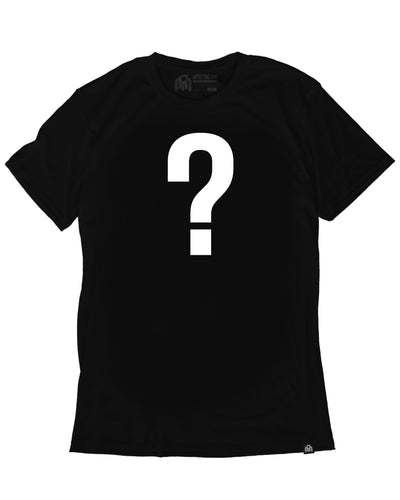
3. Build on T-shirts. Four to six tees in your palette colours. They're the piece you'll wear most, so spend your attention here. Our Basic Tee comes in 12 colours in one fit, so you can repeat the shirt and just change the colour.
4. Add two pairs of pants. One pair of dark jeans (we'd say the Legacy Stretch Denim Jeans, obviously) and one chino in khaki or olive, like our All Day Pants. Office, dinner, Saturday: covered.
5. One layer, one jacket. A flannel or overshirt like the Fairbanks Flannel handles cool mornings; one jacket handles real cold. A long-sleeve henley fills the gap in between.
6. Two pairs of shoes. White leather sneakers and a boot. That's it.
7. One in, one out. New shirt? An old one leaves. Skip this rule and you're back to 118 items within a year or two.
| Category | Pieces | Why |
|---|---|---|
| T-shirts | 5: black, white, navy, charcoal, one more | The most-worn piece and the top-rated staple |
| Long sleeve or henley | 2 | Covers the in-between months |
| Flannel or overshirt | 2 | Layers over any tee |
| Jeans | 2: dark and mid wash | The second most-named staple |
| Chinos | 2: khaki and olive | Dresses the same tee up a notch |
| Jacket | 1 | One outer layer that goes with everything |
| Shoes | 2: white sneakers and boots | Casual shoes are a staple for most men |
Why the T-Shirt Anchors a Capsule

In a capsule, every piece gets worn more often. That's the point. But it also means a tee that fits badly shows up every week instead of once a month, so fit stops being a detail.
Here's what our own Basic Tee reviews say. There are 3,135 fit ratings on it. 86% say true to size. Of the rest, 222 people said small and 218 said large, which is about as even as a split gets. The cut isn't drifting. Comfort comes in at 95% of 3,095 ratings, and the average across 7,751 reviews is 4.4 stars. Price is $26.95. Twelve colours, S to 4XL, plus a Tall cut that adds 2 inches to the body and 1 to the sleeve.
Quick cost-per-wear maths. At the 33 wears from the Flanders study, a $26.95 tee runs about 82 cents a wear. In a capsule it comes round weekly, and over four years that's roughly 208 wears, or about 13 cents each.
| Metric | Figure |
|---|---|
| Fit ratings on the Basic Tee | 3,135 |
| Say true to size | 86% |
| Say it runs small / large | 222 / 218 |
| Say it's comfortable (3,095 ratings) | 95% |
| Average star rating | 4.4 out of 5 (7,751 reviews) |
| Price, colours, sizes | $26.95, 12 colours, S to 4XL, Regular or Tall |
| Cost per wear at 33 wears / at 208 wears (our maths) | About $0.82 / about $0.13 |
Key Insights
- Found a tee that fits? Buy it in four or five colours and a third of your capsule is done.
- Cheap isn't the same as good value. The shirt you actually grab every week is.
Further Reading
- Average Clothing Cost Per Month for Men
- E-Commerce Return Rate Statistics 2026: Why Fit Matters
- The Environmental Cost Per Wear: Premium vs. Fast Fashion
- Shop Men's Basic Tees
About INTO THE AM: INTO THE AM has sold men's apparel online since 2012, and the Basic Tee is still where most guys start: a soft cotton-blend tee cut to fit through the arms and chest without clinging at the middle, in sizes S to 4XL plus Tall. Find your size at intotheam.com.
Sources
- WRAP: Nation's wardrobes hold 1.6 billion items of unworn clothes (2022)
- Study Finds: OnePoll survey of 1,000 office-working men for Charles Tyrwhitt (2022)
- Custom Ink: Unpacking the Average Closet (2024)
- U.S. Bureau of Labor Statistics: Consumer Expenditure Surveys, 2025, Table 1203
- FRED, Federal Reserve Bank of St. Louis: Expenditures on Men's and Boys' Apparel
- U.S. Bureau of Labor Statistics: Consumer Price Index, September 2026
- TheIndustry.fashion: Spoke survey of 2,000 UK men (2022)
- Ellen MacArthur Foundation: A New Textiles Economy (2017)
- Cleaner and Responsible Consumption: Unravelling the service lifespan of garments (2026)
- Cotton Incorporated: Durability Survey in the U.S. (2026)
- WRAP: Valuing Our Clothes (2012)
- U.S. EPA: Facts and Figures about Materials, Waste and Recycling
- BCG: Selective Shoppers Want Quality and Cultural Currency (2026)
- AlixPartners: Fashion Consumer Sentiment Index (2026)
- ThredUp: 14th Annual Resale Report (2026)
- Particl: How Colors Compare, Men's Tees (2022)
- Complex: Marks & Spencer research on time spent choosing clothes (2016)
- Iyengar and Lepper: When Choice Is Demotivating, Journal of Personality and Social Psychology (2000)
- INTO THE AM: Basic Tee review and fit data (November 2026)


 Your Privacy Choices